


|


Ammonia (NH₃) is a gaseous substance with a pungent odor, directly synthesized from nitrogen and hydrogen under high temperature, high pressure, and with the presence of a catalyst. Its boiling point is -33.5℃, and its critical pressure is approximately 11.2 MPa. It is easily liquefied into a colorless liquid. Ammonia has a relatively low flammability, with an ignition point as high as 651℃. Its combustion products include nitrogen, water, and nitrogen oxides. Its explosion limit ranges from 15% to 25%, posing a certain explosion risk. Ammonia is toxic, and if leaked, it can pollute the environment.
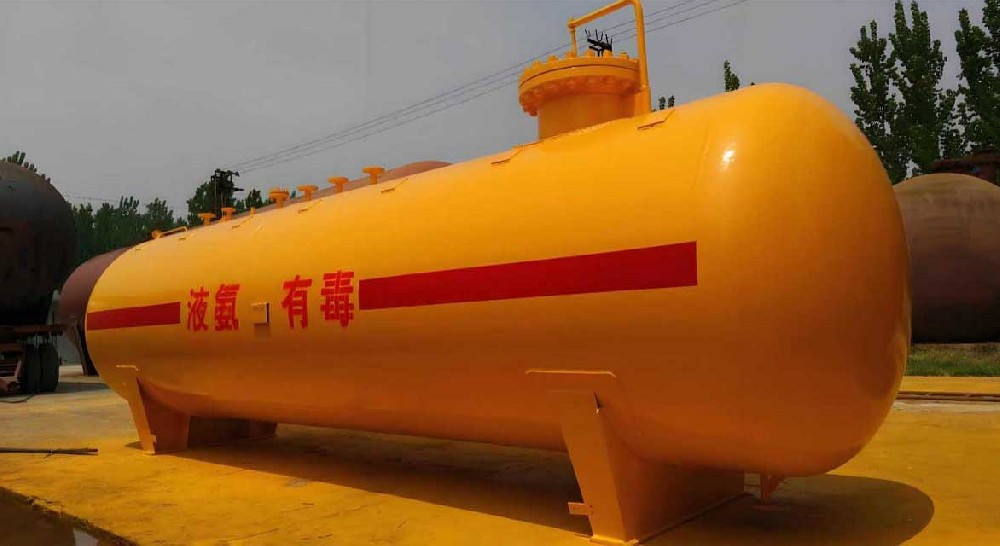
Ammonia, as a green fuel or hydrogen energy carrier, produces almost no carbon emissions. It can be liquefied into liquid ammonia by pressurizing it at -33°C or room temperature (1 MPa), significantly reducing storage and transportation costs and energy consumption. The density of liquid ammonia at standard atmospheric pressure is approximately 0.73 g/cm³; its energy density reaches 22.6 MJ/kg, which is more than 1.5 times that of liquid hydrogen. Under catalytic conditions, it decomposes to release hydrogen gas, making it an excellent hydrogen energy carrier.
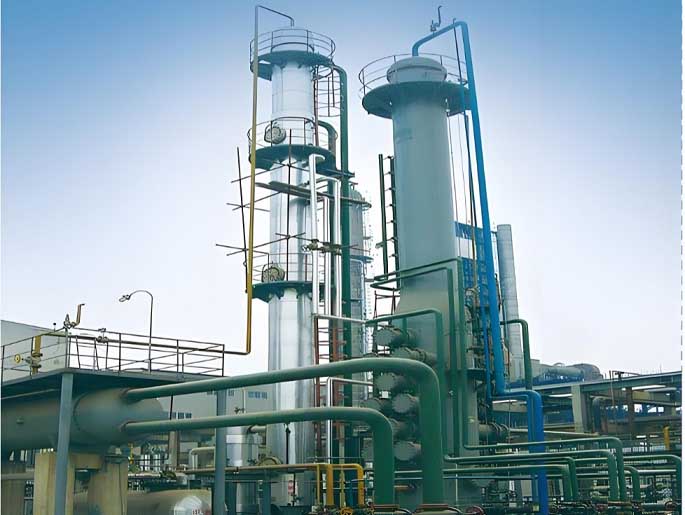
The synthesis of ammonia is the final process in synthetic ammonia production, with the task of efficiently and economically synthesizing refined hydrogen-nitrogen mixed gas into ammonia under the action of a catalyst. For the synthesis system, liquid ammonia is its product.
The production of synthetic ammonia employs the Haber-Bosch process, with a relatively simple chemical equation of 3H₂ + N₂→2NH₃. N₂ is derived from air separation, a straightforward process. However, hydrogen is produced from either coal-to-hydrogen or natural gas-to-hydrogen, which involves complex processes. Both coal-to-hydrogen and natural gas-to-hydrogen for ammonia production involve "retaining hydrogen and removing carbon", resulting in significant carbon emissions, which are the primary source of carbon emissions in the synthetic ammonia industry.
Since synthetic ammonia has no special requirements for hydrogen sources, it can be fully substituted by green hydrogen. The production process of green ammonia is simple, mainly involving nitrogen air separation and nitrogen-hydrogen reaction, and it requires a small footprint. Green ammonia plants can be built alongside hydrogen production bases using water electrolysis, achieving distributed hydrogen and ammonia production and enabling real-time consumption of green hydrogen. At the same time, it nearly achieves zero carbon emissions.
According to data from the International Maritime Organization, global carbon emissions from ships account for approximately 2.2% to 2.5% of the world's total emissions, highlighting an urgent need for carbon reduction. Green ammonia, green methanol, and green hydrogen have emerged as the three most prominent green alternative fuels in the shipping industry. Compared to the other two green fuels, green ammonia fuel is easy to compress and store, and can achieve zero carbon emissions throughout its entire lifecycle at a lower cost. Therefore, green ammonia is poised to become one of the most competitive green alternative fuels in the shipping sector.
Quality requirements for Ammonia fuel:
1. Purity and Impurity Control:
■ The purity of liquid ammonia should be ≥ 99.5%, with moisture content below 0.1%.
■ The total content of impurities (such as oxygen, nitrogen oxides, hydrogen sulfide, etc.) should be below 0.05%, and dissolved oxygen should be controlled below 2.5 ppm.
■ The pH value should be maintained within the range of 6-8 to avoid corrosive effects.
2. Physical properties: The density of liquid ammonia is approximately 0.73 g/cm³ under standard atmospheric pressure, and it needs to be stored at a temperature close to its boiling point (-33℃) to maintain a stable state.

Copyright © 2025 斯奥动力集团(中国)有限公司
 手机二维码
手机二维码
