


|


Liquefied Petroleum Gas (LPG) refers to a mixed gas composed of hydrocarbons produced during the process of petroleum refining. It is a kind of clean-burning fossil fuel that can be used to drive turbine or internal combustion engines. It is a mixture of propane and butane, usually accompanied by a small amount of propylene and butane. A strong odorant ethyl mercaptan are added into liquefied petroleum gas, so the LPG leakage can easily be found. LPG is mainly used as petrochemical feedstock for ethylene cracking of hydrocarbons or steam reforming to syngas, and used as fuel for industrial, civil and power generation.

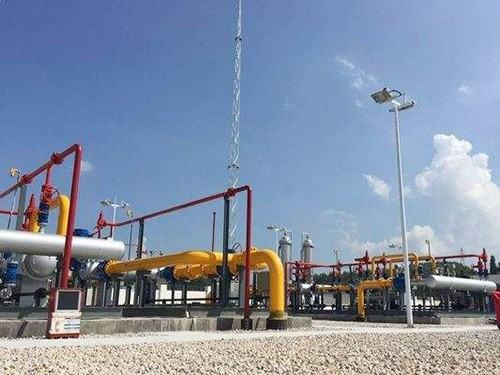
Liquefied petroleum gas (LPG) is composed of hydrocarbons such as propane, butane, and other alkanes or alkenes. The combined percentage of propane and butane should generally exceed 60%. If it is below this ratio, it cannot be called LPG. Each country has its own standards. Domestic LPG is mainly supplied for household use, and the high-quality requirements for industrial needs have not been taken into account. Therefore, the LPG produced has low propane and butane content and contains many impurities.
The composition of liquefied petroleum gas (LPG) varies depending on its source. The main components of catalytic cracking gas are as follows (in %): hydrogen 5-6, methane 10, ethane 3-5, ethylene 3, propane 16-20, propylene 6-11, butane 42-46, butene 5-6, and hydrocarbons containing more than 5 carbon atoms 5-12.
The main components of pyrolysis gas are as follows (in %): hydrogen 12, methane 5-7, ethane 5-7, ethylene 16-18, propane 0.5, propylene 7-8, butane 0.2, butene 4-5, and hydrocarbons containing more than 5 carbon atoms 2-3. These hydrocarbons are easily liquefied. They are compressed to only 1/250 to 1/33 of their original volume and stored in high-pressure steel tanks. When in use, the valve of the liquefied gas tank is opened, and the flammable hydrocarbon gas enters the burner through the pipeline. Upon ignition, a pale blue flame is formed, and a large amount of heat is generated during combustion (with a calorific value of approximately 92,100 kJ/Nm³ - 121,400 kJ/Nm³).

Copyright © 2025 Soar Power Group
 Mobile QR code
